BLOG
Catherine Barr Grant
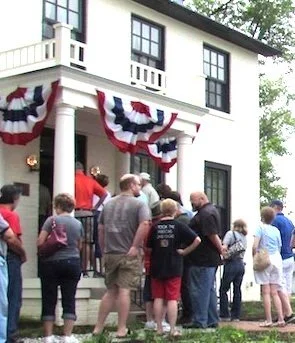
Adam G. Grant’s name is well-known in Grove City history but his grandmother often doesn’t get the credit she deserves as an early pioneer woman. Her husband, Hugh Grant Sr., is usually credited as being the first white settler in the area. He purchased acreage in what was then Franklin Township (Jackson Township in 1815) but upon the journey from Pittsburgh via Chillicothe, he was unable to identify his property. Instead, he constructed a temporary shelter on the banks of the Scioto River where the family lived. After his untimely death, it was up to Catherine Barr Grant and their children to search and finally identified the property, a feat she accomplished. A log structure provided a new, permanent home for the family until around 1830 when a son, Hugh Grant Jr., built the brick house identified today as the Grant-Sawyer House now listed on the National Register of Historic Places.
Death Pike
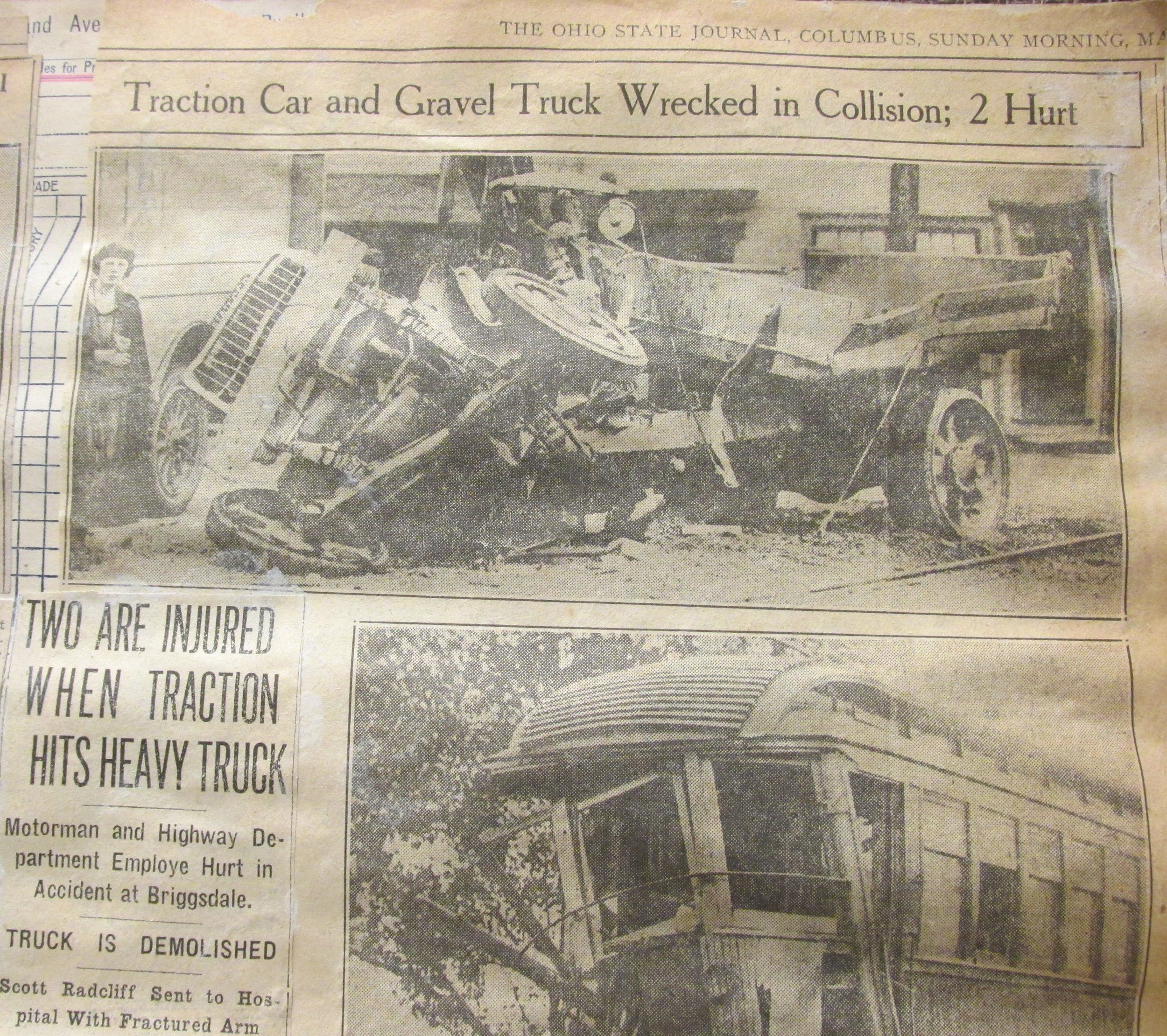
Harrisburg Pike has had many names over the years. One not commonly remembered today was when it was referred to as Death Pike because of so many fatal auto accidents in and around Grove City. A few years after Adam Grant sold his street car line to the Applegate Syndicate, a Grove City Interurban, then called a traction vehicle, collided with a gravel truck in Briggsdale in a non-fatal accident. Years later, in an effort to slow motorists entering the village, Grove City created an unpopular speed trap with the town’s first motorcycle cop poised at Rose Avenue.

Grant-Sawyer Home Virtual Tour
We have just released a new virtual tour of the Grant-Sawyer Home—you’ll find a QR code on the main building’s back porch onsite, which will install the STQRY Guide app on your phone. Follow the instructions, and as you approach each building, you’ll get content including photos, an audio description, and other info. This provides a “virtual docent” for times when we don’t have anyone on site. Check it out!
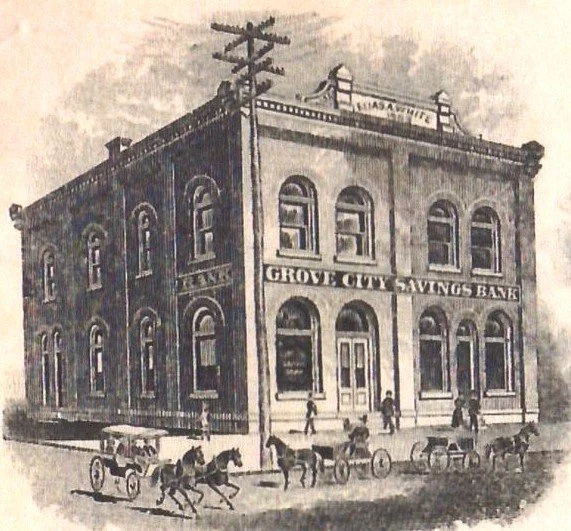
Early Grove City Banks
An old document uncovered in the files of the Southwest Franklin County Historical Society states before the first banks opened in Grove City in 1903, residents either traveled to Columbus or borrowed money from private individuals at exorbitant interest rates.
Eugene C. Wagner, Adam G. Grant and Emil Kiesewetter realized an opportunity and organized the Grove City Savings Bank on April 21, 1903 with a capital of $25,000. Local business owners and area farmers were quick to purchase stock in the new bank located in a small building on the west side of Broadway near Grove City Road. As the bank prospered, more space was needed and in 1905, it relocated to new office space in the Elias A. White building, at the southeast corner of Broadway and Park Street until 1923 when a new bank building was constructed across the street. Grove City Savings was later purchased by Tiney M. McComb changing the name to the Franklin Bank. Kiesewetter, one of the founders of Grove City Savings Bank also organized the Ohio Savings Bank that eventually became Ohio National Bank.
Grove City’s second bank, The Farmers and Merchants Bank, opened in Grove City in the spring of 1903 but it wasn’t capitalized with $25,000 until June 11. At that time, the bank’s name was changed to The First National Bank. The men who established the bank included Joseph M. Briggs and Daniel Weygandt. That bank was located at the southeast corner of Broadway and Columbus Street eventually becoming part of Huntington Bank. For many years, the Ohio Bell Telephone Company operated its office and exchange on the second floor.
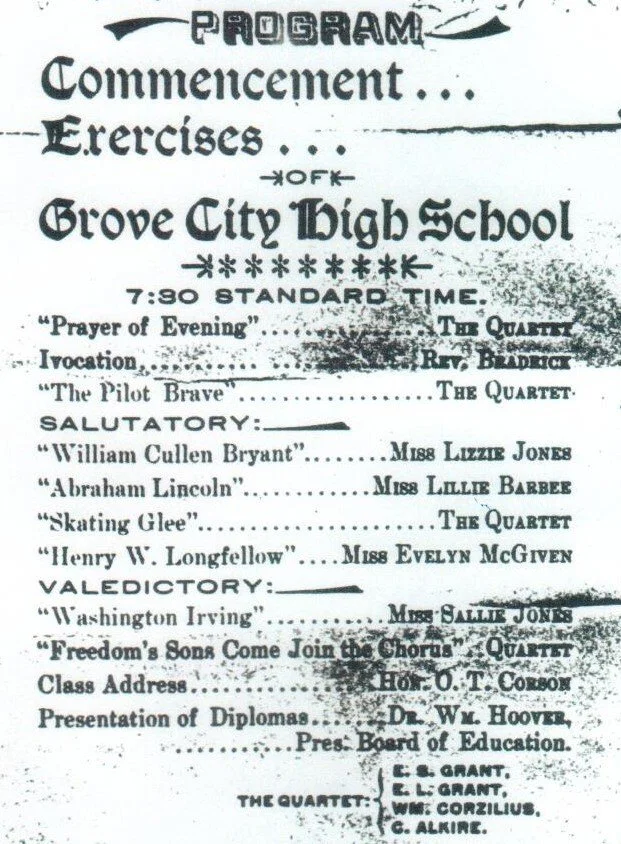
Park Street Commencement
The first school in Grove City was an existing log structure located on Lot 32 at School Street (Park Street) and Alley #2 (Arbutus Avenue), according to research by Faye Morland in her book, Epoch of the Park Street School. A new wood frame structure was built on the site around 1862 and replaced in 1888 by a brick, two story school. A three-year high school curriculum was offered at the Park Street School around 1893 and three years later, the first graduation class was all girls, as shown. By 1908, an issue over a Presbyterian or Methodist prayer caused a community uproar just before a commencement service. The school board wanted to hold the ceremony at Adam Grant’s auditorium but he initially refused because he wanted a “good old Methodist prayer” so the board made plans to hold the commencement at the Presbyterian Church. Grant backed down and allowed the school board to used his auditorium with a Presbyterian sermon and prayer.